



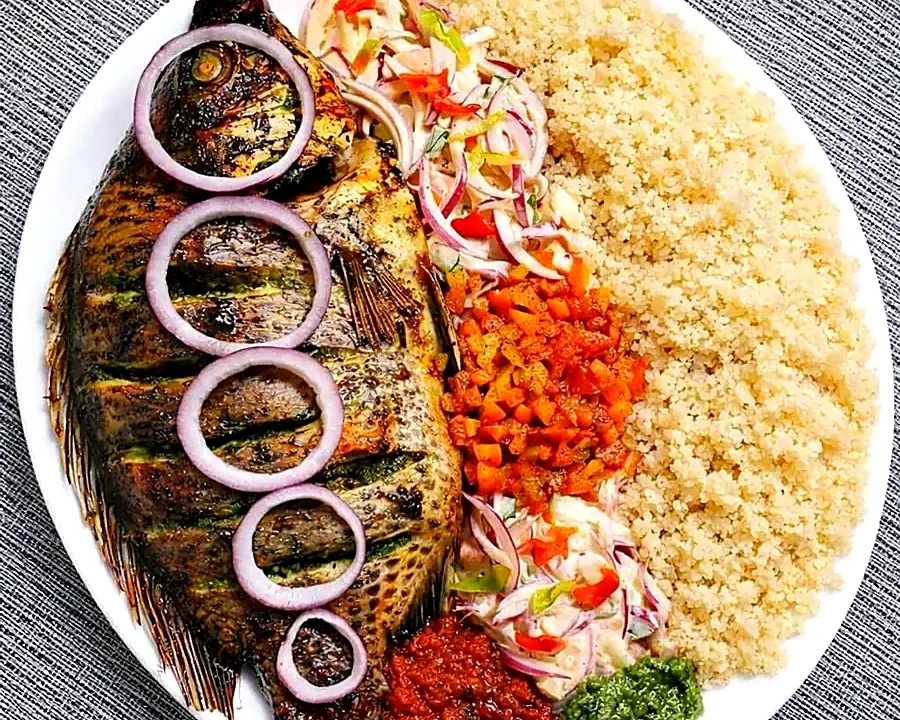
Garba is one of Côte d'Ivoire's best-loved street foods: attiéké served with fried tuna, onions, tomato and a spicy sauce. Born in Abidjan's working-class neighbourhoods, it is eaten at any hour and is now part of the Ivorian culinary landscape. Here is how to make it at home.
Ingredients (serves 4)
- 500 g attiéké
- 4 tuna steaks (about 150 g each)
- 2 onions and 2 tomatoes
- Chilli, to taste, and salt
- Oil for frying
Steps
- Prepare the attiéké: moisten it lightly, let it rest, then steam it for 10 to 15 minutes, fluffing halfway through (see our steamed attiéké recipe).
- Season the tuna with salt and, if you like, chilli.
- Fry the steaks in hot oil until golden and cooked through.
- Prepare the garnish: slice the onions, dice the tomatoes and make a spicy sauce.
- Serve the hot attiéké with the tuna, onions, tomatoes and sauce.
Our tips
- Choose very fresh fish and cook it right through. As with any street food, also favour a vendor who cares about hygiene: this is one of ANAREKA-CI's priorities alongside the INHP.
- Fluff the attiéké before and after steaming to keep it light.
- Serve straight away: garba is eaten hot.
A street food, a living heritage
Garba shows the place of attiéké in everyday Ivorian life. To learn more about how the semolina is made, from cassava harvest to steaming, read our complete attiéké guide and discover its UNESCO inscription.
Frequently asked questions

What is garba?
Garba is an iconic Abidjan street food: attiéké served with fried tuna, onions, tomato and a spicy sauce.
Which fish should I use for homemade garba?
Tuna steaks, fried until golden. Choose very fresh fish and cook it right through.
How do I get the attiéké right for garba?
Moisten it lightly, steam it and fluff it well: our steamed attiéké recipe details every step.
Is garba gluten-free?
Attiéké is made only from cassava, which is naturally gluten-free. Check any coating or seasoning used on the fish, though.