



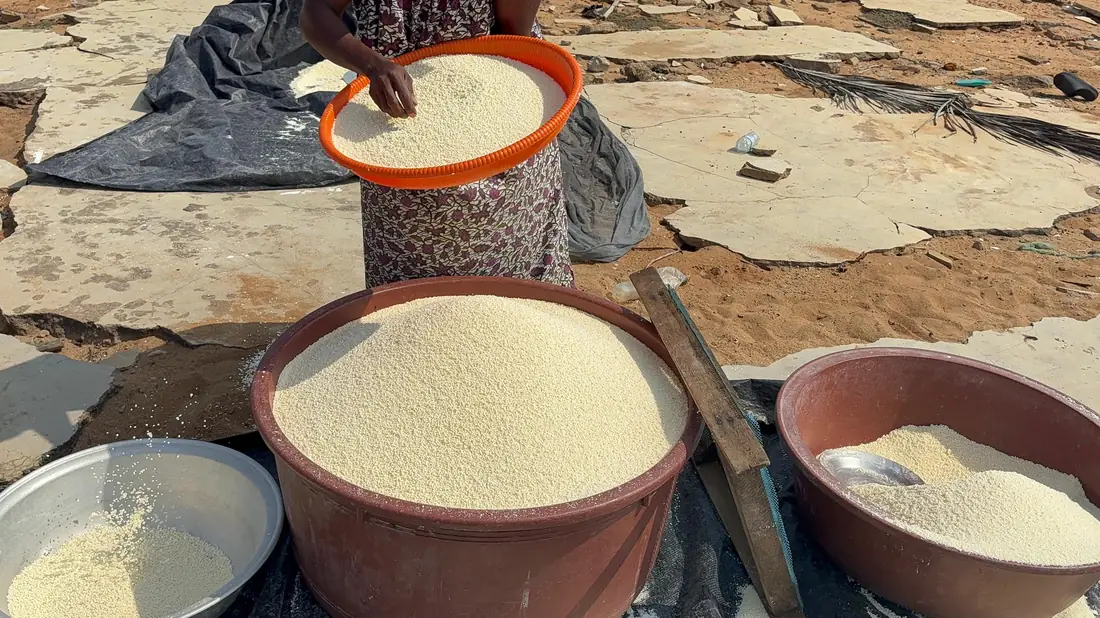
Attiéké is the fermented cassava semolina that defines Ivorian cuisine. Sold pre-cooked or dried in markets and shops, it takes only minutes to prepare: the secret to good attiéké is steaming and fluffing the grains well, so they stay light and never sticky. Here is the method, step by step.
Ingredients (serves 4)
- 500 g attiéké (fermented cassava semolina, pre-cooked or dried)
- About 15 cl lukewarm water, adjusted to the package instructions
- 1 pinch of salt
- 1 to 2 tablespoons vegetable oil (or palm oil, as preferred)
How to cook it
- Fluff. Crumble the attiéké with your fingertips to break up lumps and separate the grains.
- Moisten lightly. Sprinkle with salted lukewarm water in small amounts, stirring. It should be just damp: too much water makes it pasty.
- Rest for a few minutes so the semolina absorbs the water.
- Steam for 10 to 15 minutes in a couscous steamer or a steaming basket lined with a clean cloth. Fluff again halfway through.
- Finish. Fluff with a fork, add a drizzle of oil and toss gently. Serve right away, piping hot.
Quick version: sprinkle the attiéké with a little water, microwave for about 3 minutes, fluff with a fork, then season with salt and oil. It works, but steaming remains closest to tradition.
Tips for light attiéké
- Do not over-wet the semolina before cooking.
- Fluff before and after cooking: this is what gives the airy texture.
- Follow the package instructions: some attiéké is already cooked and only needs reheating over steam.
- Serve straight away: attiéké cools and packs down quickly.
What to serve with attiéké
Attiéké is most often enjoyed with grilled or fried fish (sea bream, captain fish, tilapia) marinated with garlic, ginger and lemon. It pairs well with a tomato-onion sauce with chilli, grilled chicken and alloco (fried plantain). It is also the base of garba, hugely popular in Abidjan: attiéké served with fried tuna.
A recognised know-how
Behind this everyday dish lies a know-how passed down through generations, mainly by women: peeling, grinding, pressing, fermenting, winnowing and steaming. To discover these steps, from cassava harvest to the plate, read our complete guide to attiéké, which also covers its UNESCO intangible cultural heritage listing and the “Attiéké des Lagunes” geographical indication.
Frequently asked questions

How long should attiéké be steamed?
Usually 10 to 15 minutes, fluffing the semolina halfway through. Always check the package instructions, as some attiéké is already pre-cooked.
How do I stop attiéké from turning sticky?
Moisten it only lightly, fluff it well before and after cooking, then add a drizzle of oil at the end.
Can attiéké be reheated in the microwave?
Yes: sprinkle it with a little water, heat for about 3 minutes, then fluff with a fork. Steaming, however, gives a result closer to tradition.
What do you eat attiéké with?
With grilled or fried fish, tomato-onion sauce, grilled chicken, alloco, or as garba with fried tuna.